Key Takeaways
- Mobile-first design involves building your website for mobile devices first, then scaling up for larger screens.
- Google’s mobile-first indexing means the mobile version of your site is the primary factor for search rankings.
- A strong mobile-first design improves Core Web Vitals, lowers bounce rates, and enhances local SEO.
- This approach also boosts user engagement through simplified navigation, a superior user experience, and higher conversion rates.
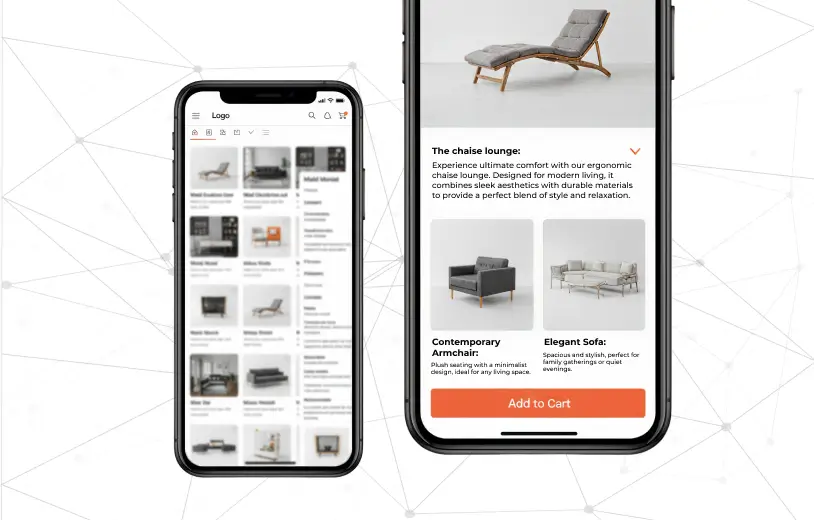
The terms “mobile-friendly,” “responsive,” and “mobile-first” are often used interchangeably, but they represent fundamentally different strategies in web development.
While a mobile-friendly site is simply usable on a mobile device and a responsive site adjusts to various screen sizes, a mobile-first approach completely flips the script. It means designing and developing for the smallest screen first, then progressively enhancing the experience for larger screens.
This strategy ensures the most critical content and features are prioritized, leading to a superior user experience and stronger performance on all devices.
What is Mobile-First Design?
Traditionally, websites were designed for desktop computers and then adapted, or “shrunk down,” for smaller screens.
This often resulted in a clunky, slow, and frustrating user experience on mobile devices. Mobile-first design flips that process on its head. It means building your website for the smallest screens first, prioritizing the most essential content and functionality.
Once the mobile experience is optimized and seamless, you then progressively enhance it by adding features and design elements for larger screens, like tablets and desktops.
This strategy ensures that the core of your website is streamlined, fast, and intuitive for the majority of your users.
Why Mobile-First is Critical for SEO
For years, Google has used “mobile-first indexing,” which means it primarily uses the mobile version of your website to evaluate its content for ranking.
If your mobile site is missing content, has slow loading times, or is difficult to use, it will negatively impact your search rankings—even if your desktop site is perfect.
Here’s how a strong mobile-first design strategy boosts your SEO:
- Improved Core Web Vitals: Google uses a set of metrics called Core Web Vitals to measure user experience. These metrics—which include Largest Contentful Paint (LCP) for page load speed, First Input Delay (FID) for interactivity, and Cumulative Layout Shift (CLS) for visual stability—are crucial ranking factors. By adopting a mobile-first strategy, we inherently optimize for these benchmarks, ensuring your site not only performs well but also ranks higher on Google.
- Lower Bounce Rates: A website that is fast and easy to use keeps visitors on the page longer. Low bounce rates signal to search engines that your content is valuable and engaging, which can improve your rankings over time.
- Enhanced Local SEO: A significant percentage of mobile searches are for local businesses. A well-optimized mobile site with features like click-to-call buttons and easy-to-access maps can significantly improve your local search visibility.
Driving User Engagement with Mobile-First Design
Beyond SEO, a mobile-first approach is key to capturing and keeping a user’s attention. Mobile users are often on the go and have shorter attention spans.
They expect a website to load instantly and provide the information they need without any hassle.
- Simplified Navigation: Limited screen real estate forces you to prioritize and simplify. This results in a cleaner, less cluttered design with clear calls-to-action (CTAs) that are easy to find and tap, leading to higher engagement and conversions.
- Superior User Experience (UX): A design built for mobile feels intuitive. It avoids cumbersome desktop elements like hover menus and focuses on touch-friendly buttons and logical content flow. This focus on the user’s journey creates a positive and memorable experience.
- Increased Conversions: When a user can effortlessly browse products, fill out a form, or complete a purchase on their phone, they are far more likely to convert. Mobile-first design removes the friction points that lead to cart abandonment and lost opportunities.
For enterprise brands, the stakes are too high to treat mobile as an afterthought. A strategic investment in mobile-first design isn’t just about adapting to a trend; it’s about future-proofing your business, securing your position in search rankings, and—most importantly—delivering the seamless, high-quality experience your customers have come to expect.
Ready to Make Your Mobile Strategy a Competitive Advantage?
Don’t let a subpar mobile experience hold your enterprise back. Fahrenheit Marketing specializes in implementing a mobile-first design approach that not only meets user expectations but also delivers tangible results.
We help transform your digital presence into a fast, intuitive, and high-converting platform that ranks higher and engages your audience more effectively.
Ready to build for the future? Schedule your free consultation today to discuss your mobile strategy.