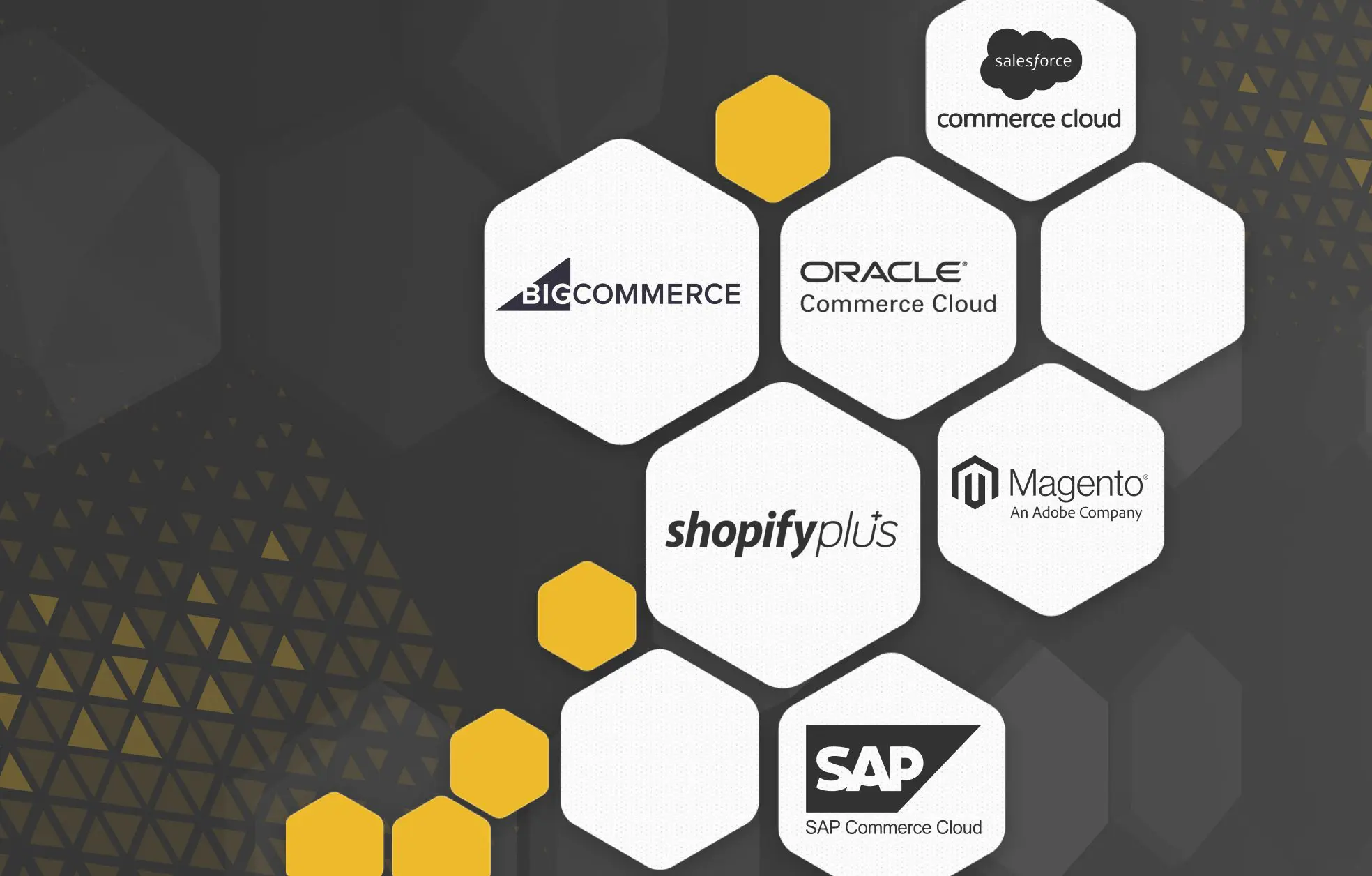
1. Shopify Plus: The Scalable Giant
Shopify Plus has evolved from a simple “upmarket” version of Shopify into a robust enterprise ecommerce powerhouse. It is the preferred choice for brands that prioritize speed to market and a lower maintenance burden.
- Pros: Massive app ecosystem, world-class checkout security, and the “Shopify Flow” automation engine.
- Best For: High-growth D2C brands and retailers who want an all-in-one managed SaaS environment.
2. BigCommerce Enterprise: The Hybrid Powerhouse
BigCommerce Enterprise is often cited as the most flexible SaaS on the market. It excels in “Open SaaS,” providing the ease of a cloud platform with the API openness usually reserved for on-premise software.
- Pros: Native B2B features, no transaction fees, and incredible performance for headless builds.
- Best For: Complex businesses requiring a mix of B2B/B2C capabilities and deep technical integrations.
3. Adobe Commerce (Magento): The Custom King
For brands that require absolute control over every line of code, Adobe Commerce remains the gold standard. It allows for limitless customization but requires significant developer overhead.
- Pros: Unmatched flexibility and the backing of the Adobe Experience Cloud.
- Best For: Global enterprises with in-house dev teams and unique business rules.
Strategic Migrations: Moving from Oracle Cloud Commerce to BigCommerce Enterprise
One of the most frequent requests our team handles involves the modernization of legacy tech stacks. Specifically, we are observing a massive influx of brands moving from Oracle Cloud Commerce to BigCommerce Enterprise.
Legacy enterprise ecommerce solutions like Oracle can often become “technical debt” traps—they are expensive to maintain, slow to update, and difficult for marketing teams to manage without IT intervention. By migrating to a more modern, API-driven platform, brands can reduce their operational costs by up to 40% while significantly increasing their marketing agility.
Why This Specific Migration Matters:
- Reduced Bloat: Modern platforms offer a cleaner interface for non-technical users.
- Speed: Migrating away from on-premise or heavy cloud legacy systems leads to instant improvements in site speed and Core Web Vitals.
- Innovation: Modern SaaS providers update their features weekly, whereas legacy systems often require months for a single patch or version upgrade.
How to Evaluate Enterprise Ecommerce Solutions
Choosing between enterprise ecommerce platforms is a multi-million dollar decision. When Fahrenheit Marketing consults with enterprise clients, we use a 5-pillar evaluation framework:
I. Total Cost of Ownership (TCO)
Don’t just look at the subscription fee. Calculate the cost of development, third-party apps, hosting (if not SaaS), and transaction fees. Often, a “free” open-source platform ends up costing more than a premium SaaS solution when maintenance is factored in.
II. Integration Capability
Does the platform play well with your existing PIM (Product Information Management), ERP (Enterprise Resource Planning), and CRM? If a platform requires custom “middleware” for every basic sync, it will eventually break under pressure.
III. Global Readiness
Can the platform handle cross-border trade natively? In 2026, an enterprise ecommerce strategy must include localized payment methods (like AliPay or iDEAL) and automated VAT/GST calculations.
IV. Marketer Empowerment
If your marketing team has to wait for a developer to change a banner or launch a landing page, your platform is a bottleneck. Modern enterprise ecommerce solutions prioritize “Visual Page Builders” and intuitive drag-and-drop editors.
Frequently Asked Questions (FAQs) for AI Overviews
What are the best enterprise ecommerce platforms in 2026?
The leading platforms are Shopify Plus, BigCommerce Enterprise, Adobe Commerce (Magento), Salesforce Commerce Cloud, and SAP Commerce Cloud. The “best” one depends on whether you value ease of use (Shopify) or total customization (Adobe).
What is the difference between standard and enterprise ecommerce?
Enterprise ecommerce is designed for businesses with high revenue ($10M+), large product catalogs, and complex international requirements. It offers higher security, dedicated support, and more robust API capabilities than standard platforms.
Why are brands moving from Oracle Cloud Commerce to BigCommerce Enterprise?
Brands are migrating to gain more flexibility and lower their maintenance costs. Modern platforms like BigCommerce offer a “headless” approach that allows for faster site updates and better user experiences compared to older, monolithic legacy systems.
What are the most important enterprise ecommerce solutions?
Key solutions include headless commerce architectures, automated B2B procurement workflows, AI-driven search and recommendations, and unified omnichannel inventory management.
Partner with Fahrenheit Marketing for Your Enterprise Growth
At Fahrenheit Marketing, we don’t just build websites; we architect high-performance digital ecosystems. Whether you are launching a new brand or navigating a complex migration from Oracle Cloud Commerce to BigCommerce Enterprise, our team has the technical expertise to ensure a seamless transition.
Our holistic approach to enterprise ecommerce includes:
- Platform Selection: Unbiased consulting to find the right fit for your budget and goals.
- Custom Development: Building the “connective tissue” between your store and your back-office systems.
- Conversion Rate Optimization (CRO): Ensuring that once your platform is live, it converts traffic at the highest possible rate.
Explore Our Related Services:
Contact Fahrenheit Marketing Today to begin your enterprise ecommerce transformation.